
Photo gallery - page 2
Haulage incline, Diffwys Casson quarry

This early example of a single track incline drum was formerly used to work an incline bringing slate up from the underground workings. It was steam powered from an adjacent stationary boiler. The band brake lining is still intact but the brass bearings, not surprisingly, have been removed
A derelict quarry diesel locomotive
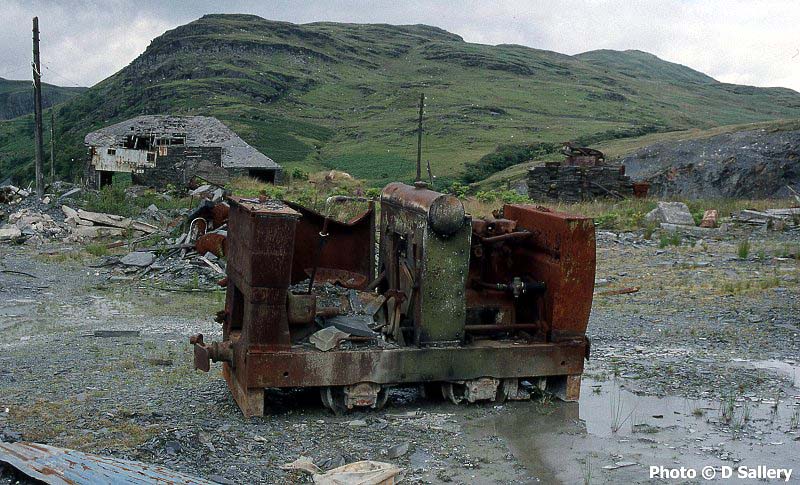
This derelict diesel loco was at Llechwedd quarry in Blaenau Ffestiniog some years ago. It did'nt always look like this!
Cwmorthin quarry barracks, Tan y Grisiau
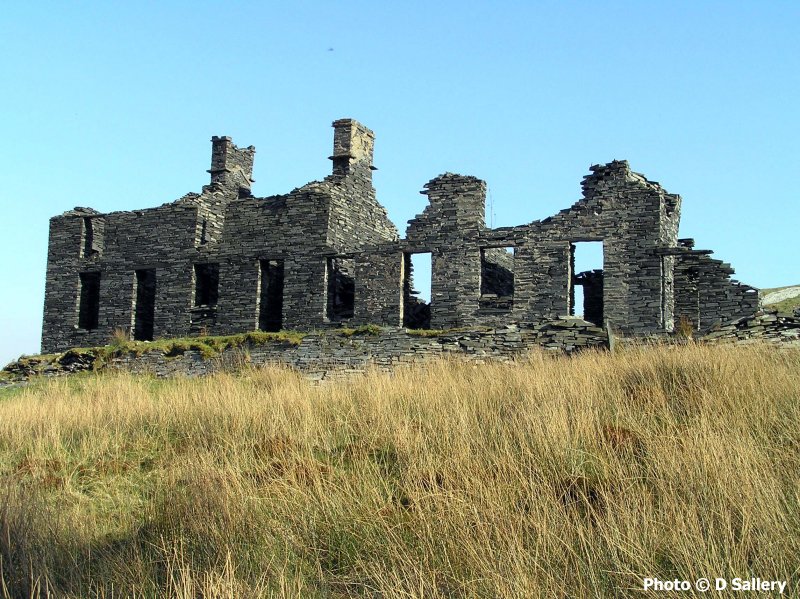
The barracks block at Cwmorthin quarry near Blaenau Ffestiniog. Cwmorthin had a very bad reputation in the industry for dangerous working practices, so much so that many of the local men refused to work there.
Dinorwic Quarry in the snow

The Garret or A series inclines in winter.
Llyn Cwm Corsiog, a reservoir for Rhosydd quarry.
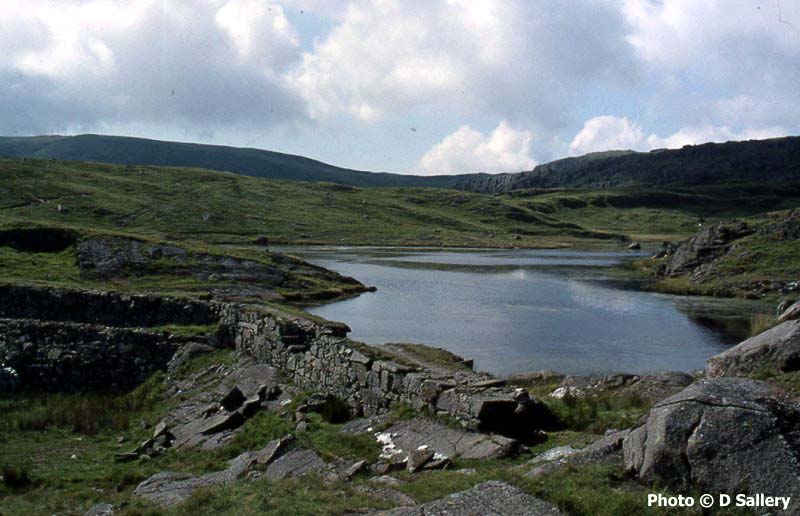
Many quarries relied on water power to operate slate dressing machines, pumps and inclines. In this very wet part of the world, water came free whereas coal and steam power was expensive. In many cases existing lakes were enlarged by the quarrying companies to cater for their new use. However, Llyn Cwm Corsiog is a purely artificial reservoir created in 1899 to supply water to Rhosydd Quarry. Part of the dam, which was constructed to create the lake, can be seen in the foreground. A fuller description of this quarry can be seen on my website - Rhosydd - A Ffestiniog quarry.


