Prince of Wales Quarry, Cwm Pennant
Prince of Wales quarry was opened in 1873 and proved to be a wildly optimistic development, closing by 1886. The quarry is situated at the end of the minor road up Cwm Pennant. Ironically the tramway to Prince of Wales was an extension of a defunct one which lead to Gorseddau quarry - another equally hopeless venture. For more information on the tramway which lead to these quarries this page by the late Ben Fisher is recommended. Prince of Wales quarry today contains many old buildings and structures amidst wonderful scenery and is well worth a visit. There are also many more photos of the quarry on my Flickr site.
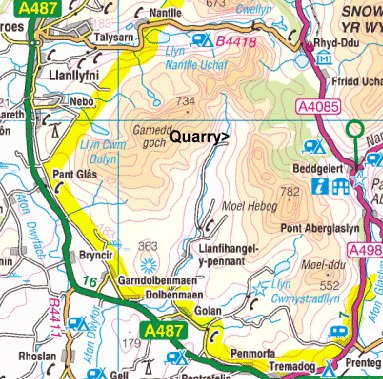
Image reproduced with permission of Ordnance Survey.

The trackbed of the grandly named Gorseddau Junction & Portmadoc Railway which led to Prince of Wales quarry. The quarry can be seen in the right background.

Ruins of the mill at the quarry, this only dealt with slabs, all roofing slate being cut and dressed on the working levels. The mill was powered by a water wheel and the pillars which carried the water supply are seen on the left.
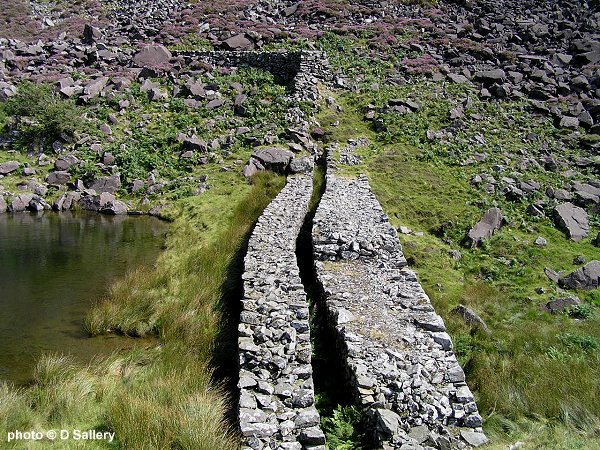
A view of the dam which is of the standard pattern of two outside walls and an inner void that would have been filled with clay. A start had been made on increasing the height of this dam - note the higher wall on the far side.
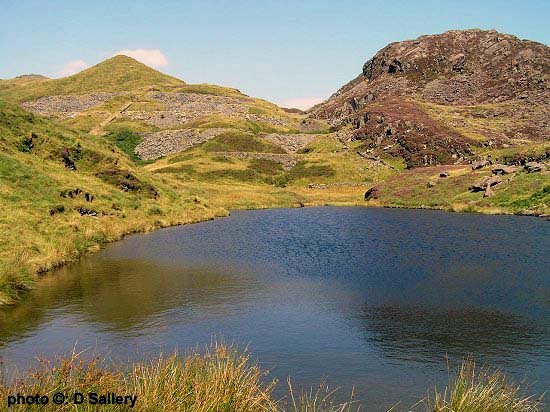
This is the lake formed by the dam in the photo above. The quarry is in the background. The water was channeled from here to the dressing shed lower down.

Here is a view of the top of the incline which raises the tramway from the mill. A level stretch follows before reaching the main quarry incline in the background.

The 2 foot gauge tramway in the quarry was partly laid on waste rock drilled to hold the chairs. The chairs held the rails and the holes for four chairs are seen here.

In this view are seen some of the ruins on the site. On the left are the barrack blocks for the quarrymen. The structures on the right are known as waliau. They were open at one end and had a sloping roof, one or two quarrymen would work in each of these buildings splitting slates.
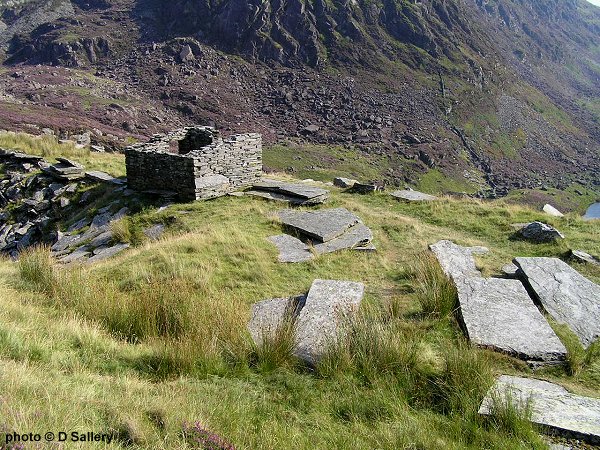
A weighbridge on one of the upper levels of the quarry. The huge slabs of waste rock are a feature of this quarry.
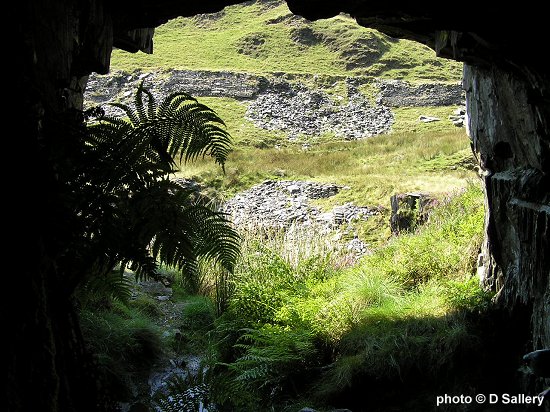
Prince of Wales contains examples of underground, pit and gallery working. This is a view from the underground adit. Visitors should BEWARE of several deep unfenced pits at the quarry.
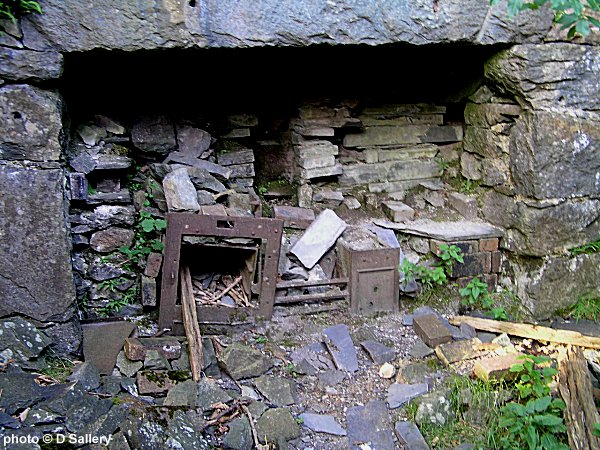
The sad remnants of the fireplace and cooking range in the ruins of the manager's house.
Next page: Anglesey Barracks, Dinorwic Quarry